
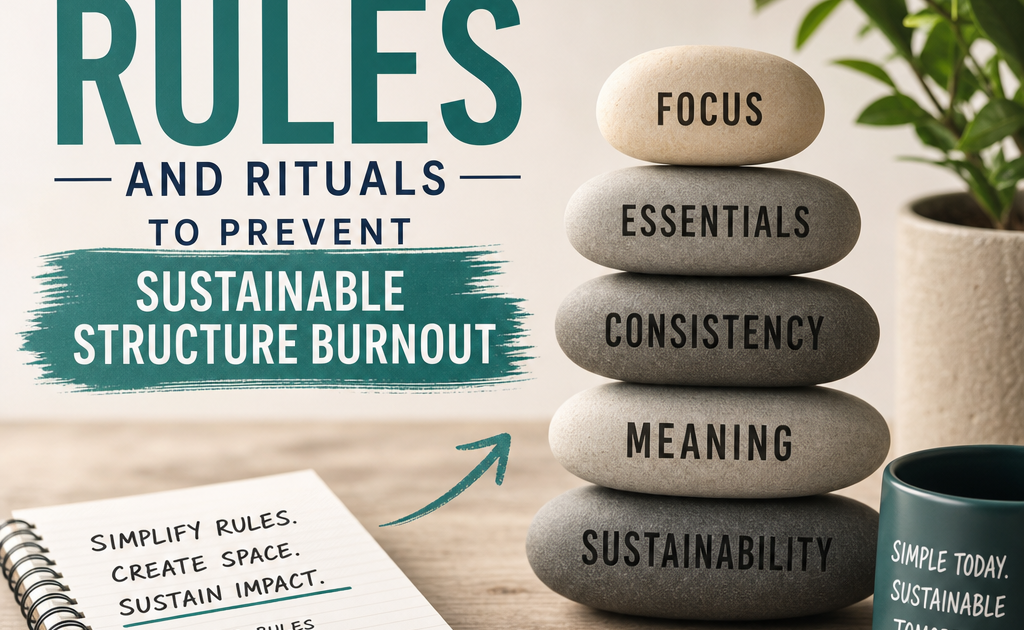
When Structure Becomes Too Much: How to Simplify Rules and Rituals
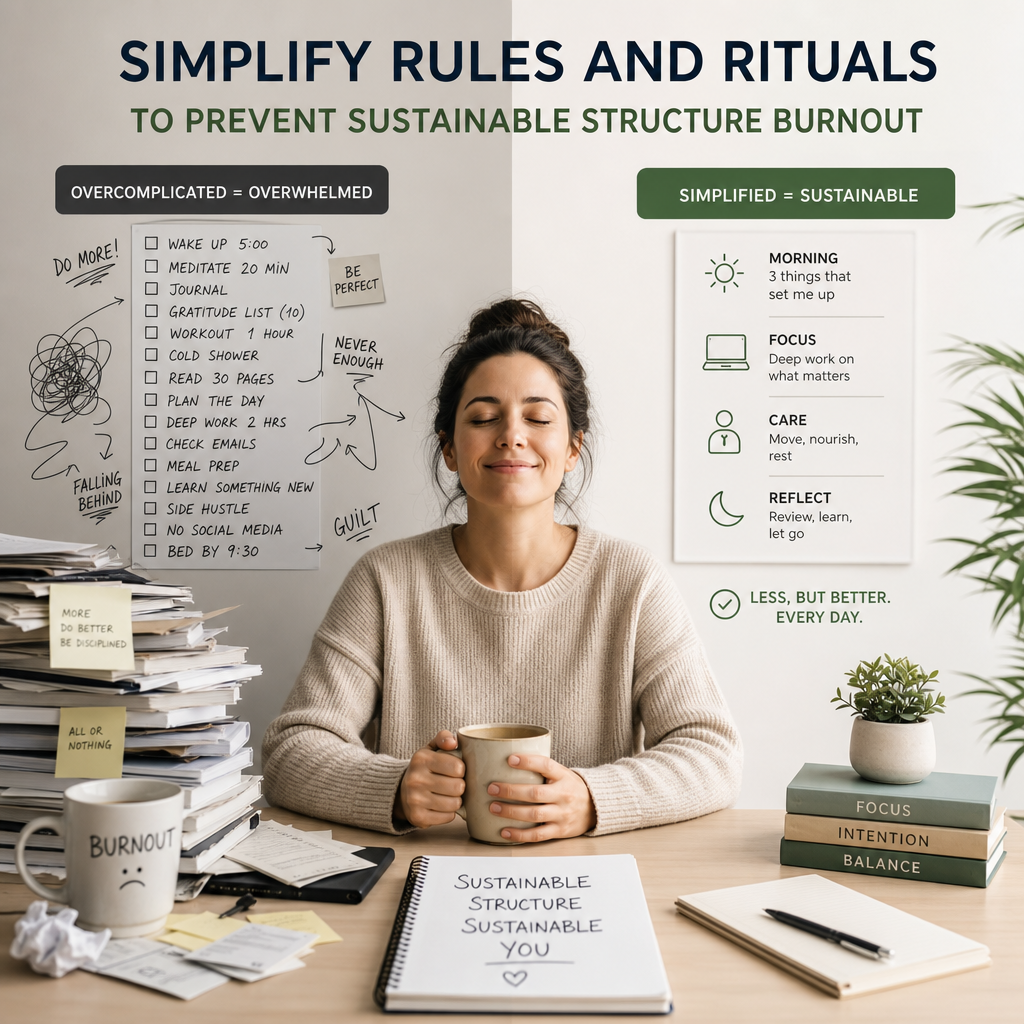
Structure can be a gift. It helps us begin, stay organized, and follow through when motivation dips. But sometimes the very systems meant to support us start to feel heavy. The checklist grows longer. The morning routine becomes a performance. The weekly planning session turns into a second job.
When that happens, it may be time to simplify rules and look at whether your habits are still helping—or just adding pressure. Too much structure can lead to ritual burnout, where even your best intentions start feeling exhausting. The goal is not to abandon discipline. It’s to build sustainable structure that supports real life instead of competing with it.
When Helpful Habits Turn Into Heavy Expectations
Most people don’t set out to overwhelm themselves. Structure usually starts with good intentions:
- to save time
- to reduce stress
- to create consistency
- to feel more in control
But over time, small routines can multiply. A five-minute journaling habit becomes a 20-minute reflection process. A simple work setup becomes a rigid sequence of steps. Even rest can begin to feel scheduled and monitored.
The problem is not structure itself. The problem is when structure stops serving a purpose and starts demanding perfection.
You may be dealing with too much structure if:
- you feel guilty when you skip a routine
- your habits take more energy than they give
- you follow rules without knowing why
- your schedule leaves little room for spontaneity
- you spend more time maintaining systems than using them
When that happens, the answer is not to try harder. The answer is to step back and simplify.
Why Ritual Burnout Happens
Ritual burnout often appears when routines become emotionally loaded. A habit that once felt grounding can begin to feel like a test. You may start to associate your structure with failure, especially if you miss a day or can’t keep up with the “ideal” version of your routine.
This can happen for a few reasons:
1. You added too many layers
One habit leads to another, and soon your simple system has become a chain of expectations. There’s a right way to wake up, a right way to plan, and a right way to end the day.
2. You copied someone else’s routine
What works for one person may not fit your energy, season of life, or personality. Borrowed systems can become a burden if they don’t match your reality.
3. You equate discipline with complexity
Sometimes we assume a serious life requires a serious routine. But effective habits are often simple, flexible, and repeatable.
4. Life has changed, but the rules haven’t
A structure that made sense during a quiet season may not work during a stressful one. If your circumstances shift, your system should shift too.
How to Simplify Rules Without Losing Direction
Simplifying does not mean giving up on progress. It means keeping only what matters. It’s about finding the smallest useful version of a habit and letting that be enough.
Here are a few ways to begin.
Identify the purpose of each rule
Ask yourself: What is this habit actually for?
If a rule does not have a clear purpose, it may be more about habit identity than usefulness. For example, if you journal every morning but rarely gain clarity from it, the ritual may need to be shortened or changed.
Keep the core, remove the extras
A good simplification question is: What is the minimum version that still works?
Instead of a full 30-minute routine, maybe you need only:
- five minutes of quiet
- one page of notes
- one priority for the day
The point is not to do less for the sake of it. The point is to protect the function of the habit while reducing the friction.
Build flexibility into the system
Rigid rules often break under pressure. Flexible ones adapt.
You might allow:
- a shorter version on busy days
- a different format when traveling
- a reset day instead of a full restart
This creates sustainable structure because it accounts for real life, not just ideal conditions.
Stop treating missed rituals as failure
Missing a habit does not erase your progress. If anything, the ability to return without drama is a sign that your system is working.
A useful structure should help you recover quickly, not punish you for being human.
Signs Your Structure Is Sustainable
You know you’ve simplified well when your routines feel useful rather than performative. A strong system is not the one with the most steps. It’s the one you can actually live with.
A sustainable structure usually has these qualities:
- it is easy to start
- it is clear enough to repeat
- it allows for change
- it supports your energy instead of draining it
- it helps you focus on what matters most
If your current rituals make your life feel narrower, more stressful, or harder to sustain, they may need to be trimmed back.
A Simpler Way Forward
There is nothing wrong with loving routines, structure, or ritual. In fact, these things can be deeply stabilizing. But they should remain tools, not rules that control your day.
When you simplify rules, you make room for consistency without rigidity. When you reduce ritual burnout, you create habits that can survive busy weeks, emotional swings, and unexpected changes. And when you choose sustainable structure, you stop chasing an ideal system and start building one that fits your actual life.
Sometimes the strongest routine is the one that knows when to step aside.