
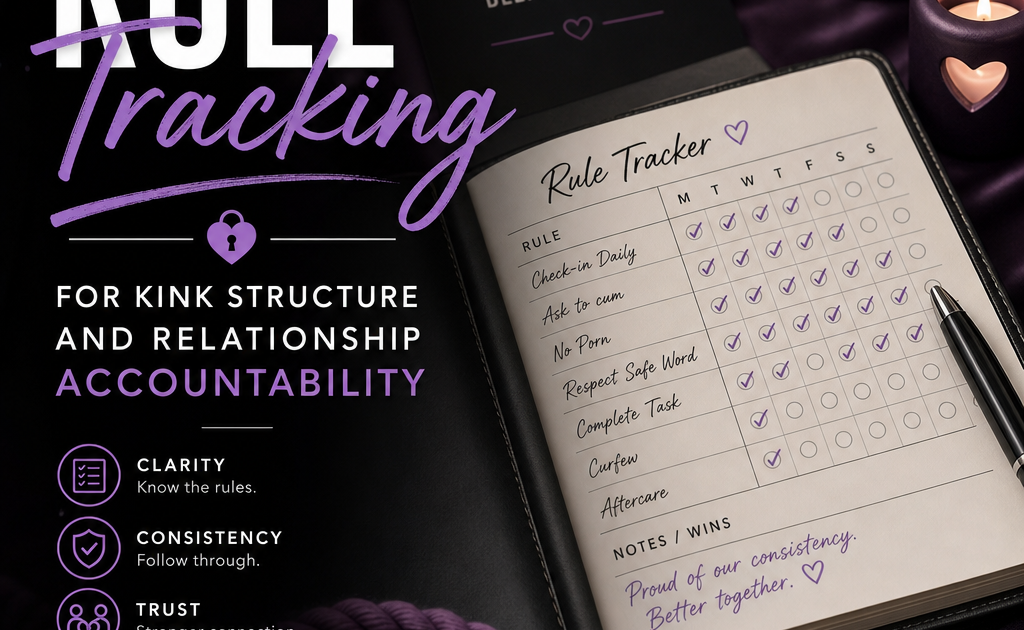
How to Start Rule Tracking Without Overcomplicating Your Dynamic

Rule tracking can add clarity, consistency, and trust to a relationship when it is done with intention. For some people, it supports kink structure and helps both partners feel grounded in their roles. For others, it simply creates a reliable system for remembering agreements and strengthening relationship accountability.
The key is to keep it simple.
Too often, people turn rule tracking into a complicated project with too many categories, too many consequences, and too much pressure to be perfect. That can make the dynamic feel more like administration than connection. A better approach is to start small, stay clear, and build a process that actually fits your relationship.
What Rule Tracking Really Is
At its core, rule tracking is a way to keep track of the agreements you and your partner have made. These might be behavioral expectations, routines, communication standards, or rituals that support your dynamic.
In a kink structure, rule tracking can help reinforce authority, consistency, and follow-through. Outside of kink, it can still be useful for couples who want more accountability and fewer misunderstandings.
The purpose is not control for its own sake. It is visibility. When both people know what has been agreed to and whether it is being followed, there is less room for confusion.
Start With a Few Clear Rules
One of the biggest mistakes people make is trying to track everything at once. If you create twenty rules on day one, you will probably end up overwhelmed and inconsistent.
Instead, begin with three to five rules that matter most.
These should be:
- Easy to understand
- Specific enough to follow
- Relevant to your actual dynamic
- Realistic to maintain over time
Examples might include:
- Checking in at a certain time each day
- Completing a shared task before bed
- Using a specific tone or title
- Notifying your partner when plans change
- Following a routine tied to care, discipline, or structure
The best rules are the ones you can clearly observe. If a rule is too vague, it becomes difficult to track fairly.
Choose a Simple Tracking Method
You do not need a complex app, spreadsheet, or color-coded system unless that genuinely helps you. For many people, a notebook, shared note, or basic calendar is enough.
A simple tracking method might include:
- The rule
- The date
- Whether it was followed
- A short note if needed
For example:
| Date | Rule | Followed? | Note |
|---|---|---|---|
| Monday | Evening check-in | Yes | On time |
| Tuesday | Completed task | No | Forgot until reminded |
This kind of system keeps things visible without making them feel heavy. The goal of rule tracking is to support the relationship, not create a second job.
Make Accountability Gentle but Consistent
Relationship accountability works best when it is steady rather than dramatic. If a rule is missed, the response should be part of the structure, not a surprise punishment driven by frustration.
That means deciding ahead of time what happens when a rule is not followed. The response might be a reminder, a check-in, a correction, a reset, or a pre-agreed consequence. Whatever you choose, it should match the tone and purpose of your dynamic.
Consistency matters more than intensity.
When accountability is predictable, both partners can trust the system. That trust is often what makes rule tracking feel supportive rather than stressful.
Avoid Tracking Every Little Thing
Another way people overcomplicate rule tracking is by turning every preference into a rule. Not every desired behavior needs to be formally tracked.
Ask yourself:
- Is this truly important to our dynamic?
- Does it need a clear consequence?
- Or is this just a preference that can be discussed casually?
If everything becomes a rule, the structure loses meaning. Save formal tracking for the agreements that really matter. That keeps the system focused and easier to maintain.
Review the System Regularly
A good rule tracking system should evolve with the relationship. What works early on may not work later, and that is normal.
Set aside time to review the structure together. During that review, ask:
- Are these rules still useful?
- Is the tracking method simple enough?
- Are we both clear on expectations?
- Do any rules need to be adjusted or removed?
Regular review prevents resentment and keeps the dynamic flexible. It also gives both partners a chance to refine the process before small issues become big ones.
Keep the Emotional Tone in Mind
Rule tracking should not feel like surveillance. It should feel like alignment.
If the process starts to create anxiety, shame, or defensiveness, pause and reassess. The system may need to be softened, simplified, or redefined. The best kink structure is one that supports connection rather than replacing it.
A strong dynamic leaves room for honesty, repair, and learning. Accountability is most effective when it is rooted in mutual respect.
Final Thoughts
Starting with rule tracking does not have to be complicated. A few well-chosen rules, a simple tracking method, and a consistent approach to relationship accountability are often enough to create real structure and stability.
Keep the focus on clarity, not perfection. Keep the system small enough to use. And remember that the best kink structure is the one both partners can sustain comfortably.
When rule tracking is simple, it becomes easier to trust, easier to follow, and far more useful in the long run.