
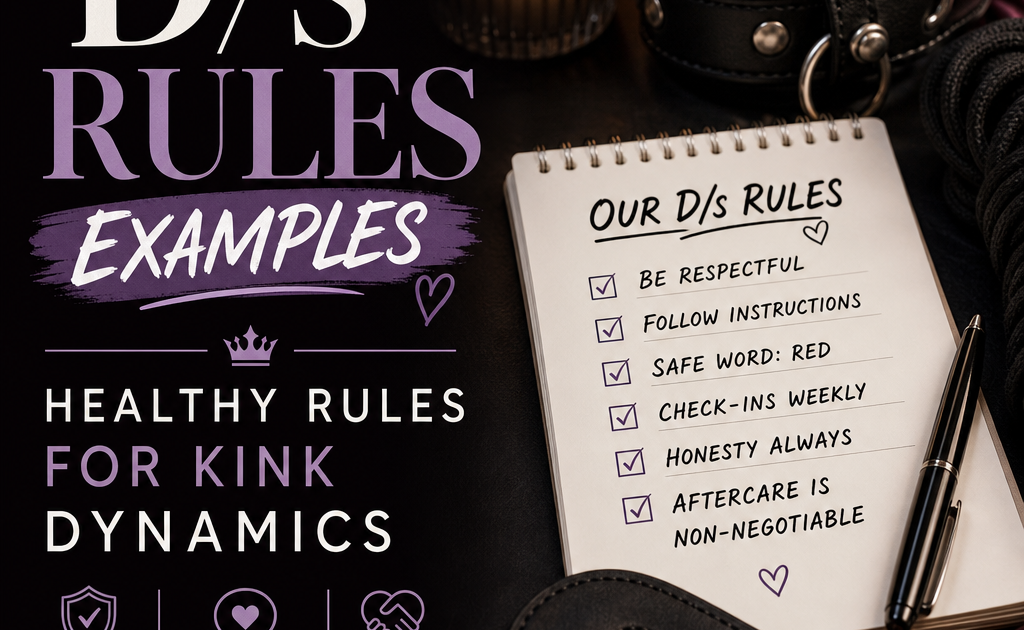
Examples of Healthy Rules in D/s Dynamics and How to Phrase Them
Healthy D/s dynamics can be deeply rewarding when they are built on trust, clarity, and mutual respect. Rules can help structure the relationship, reinforce desired behaviors, and create a sense of connection and security. But the best D/s rules examples are never about control for its own sake—they support the emotional and practical needs of both partners.
In well-balanced kink dynamics, rules should be clear, realistic, and agreed upon in advance. They should also be easy to revisit and adjust as the relationship evolves.
What Makes a Rule “Healthy”?
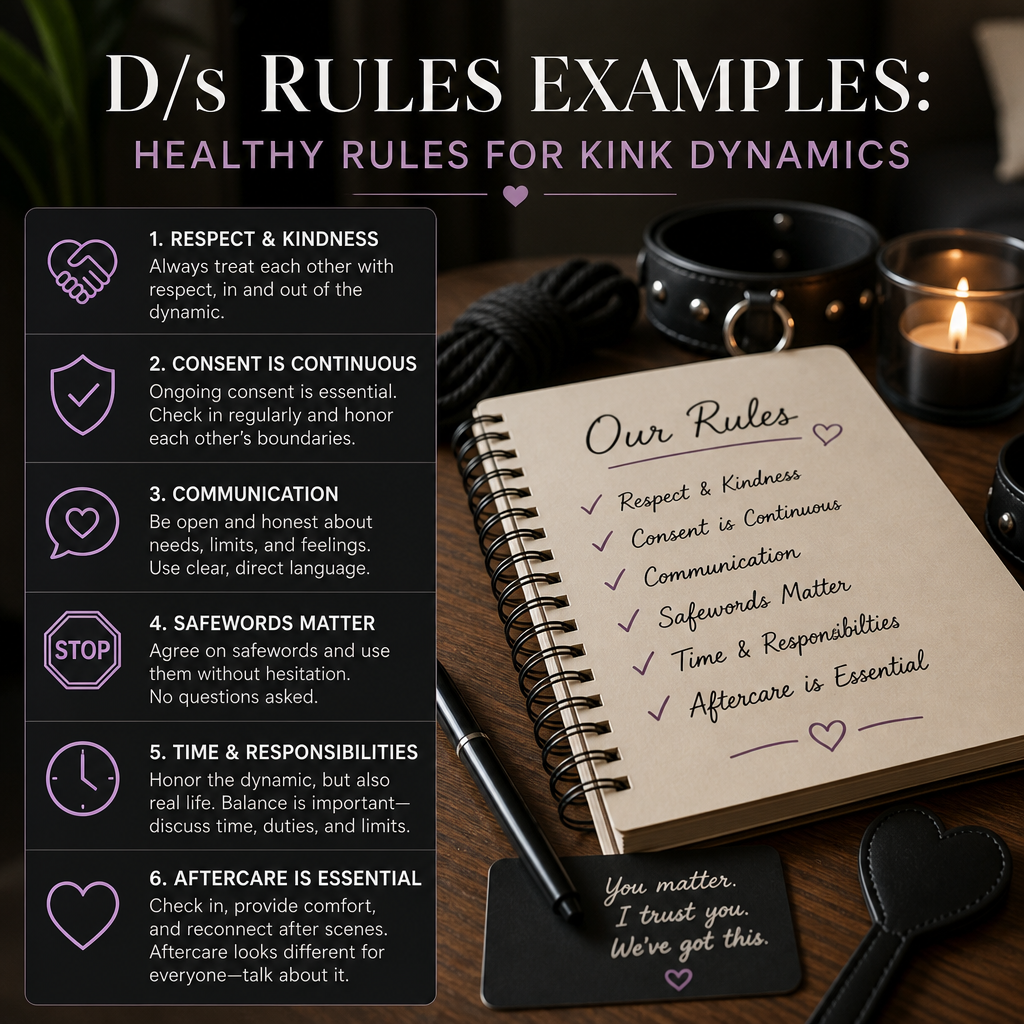
A healthy rule is one that:
- Is consensual and discussed openly
- Serves a clear purpose
- Is specific and easy to follow
- Respects boundaries, time, and real-life responsibilities
- Can be modified when needed
A rule should never be designed to isolate, shame, or wear someone down. Instead, it should strengthen the dynamic and make both partners feel more secure. If a rule creates resentment, confusion, or pressure, it may need to be reworked.
Good D/s Rules Examples for Everyday Structure
Many healthy rules focus on routine, communication, or rituals that help maintain connection. Here are some common examples:
1. Check-In Messages
A submissive may be asked to send a message at a certain time each day.
Healthy phrasing:
“Please send me a brief check-in message by 9 p.m. each evening so I know you’re safe and we can stay connected.”
This works because it is simple, achievable, and relationship-focused rather than punitive.
2. Asking Permission for Certain Activities
Some couples include permission-based rules around specific activities, such as leaving the house, making purchases, or engaging in personal habits.
Healthy phrasing:
“Before making any non-essential purchase over $50, please ask for approval first.”
That wording is concrete and limited. It avoids vague control and focuses on a shared agreement.
3. Dress Code or Presentation Rules
These can be powerful in kink dynamics when they reflect the tone of the relationship.
Healthy phrasing:
“When we attend events together, I’d like you to wear the collar and outfit we agreed on in advance.”
This keeps the rule specific to a setting, rather than trying to regulate all aspects of appearance all the time.
4. Ritualized Greetings and Farewells
Some D/s relationships enjoy small rituals like kneeling, using titles, or asking for permission before intimacy.
Healthy phrasing:
“When you come home, greet me with ‘Welcome home, Sir’ before we settle in.”
This type of rule is often meaningful because it creates a predictable moment of connection.
How to Phrase Rules Clearly
The way a rule is phrased matters almost as much as the rule itself. Clear language reduces misunderstanding and makes expectations easier to follow.
A helpful rule follows this pattern:
- When this situation happens
- What the expectation is
- Why it exists, if helpful
- What flexibility looks like if needed
For example:
“On work nights, please have dinner before 8 p.m. so you can keep your energy up and we can preserve our evening time together.”
This is better than:
“Don’t be careless with your schedule.”
The first version is concrete and compassionate. The second is vague and likely to create frustration.
Examples of Healthy Language vs. Unhealthy Language
Healthy rules usually sound calm, direct, and collaborative. Unhealthy rules often sound vague, controlling, or emotionally loaded.
Healthy language:
- “Please text me if you’ll be more than 30 minutes late.”
- “I’d like you to use the title we agreed on during scenes.”
- “Let’s revisit this rule if it stops working for either of us.”
Unhealthy language:
- “You should just know what I want.”
- “If you really cared, you’d obey without question.”
- “Rules are rules, no matter what.”
Healthy D/s rules examples leave space for discussion and consent. They also recognize that life changes, schedules shift, and needs evolve.
Tips for Building Healthy Rules in Kink Dynamics
If you’re creating new rules, keep these points in mind:
Make rules meaningful
A rule should support the relationship, not exist just because it sounds strict. Ask: does this deepen trust, structure, or intimacy?
Keep them realistic
Rules that are too complicated are hard to maintain. Simple rules are often more effective.
Separate preference from necessity
It’s fine to have preferences, but not every preference needs to become a rule. Save rules for things that truly matter to the dynamic.
Build in review points
A monthly or quarterly check-in can help both partners discuss what is working and what isn’t.
Allow exceptions for safety and real life
Work, illness, travel, and emergencies should always take priority over rules. A healthy dynamic can bend without breaking.
Sample Healthy D/s Rules Examples
Here are a few more examples of phrasing that tends to work well:
- “Please ask before beginning any new toy or practice we haven’t discussed.”
- “I want you to wear your bracelet when you’re out on your own as a sign of our connection.”
- “Send me one photo when you arrive safely at your destination.”
- “If a rule feels too difficult, tell me within 24 hours so we can adjust it together.”
Each of these rules is specific, grounded, and tied to a real purpose. They also invite communication instead of punishment as the first response.
Final Thoughts
The best healthy rules in D/s are not about control in the abstract. They are about creating structure, building trust, and helping both partners feel seen and supported. Good rules are clear, consensual, and flexible enough to survive real life.
When in doubt, keep it simple: define the behavior, state the purpose, and leave room to revisit. That approach makes kink dynamics stronger, safer, and more satisfying for everyone involved.