
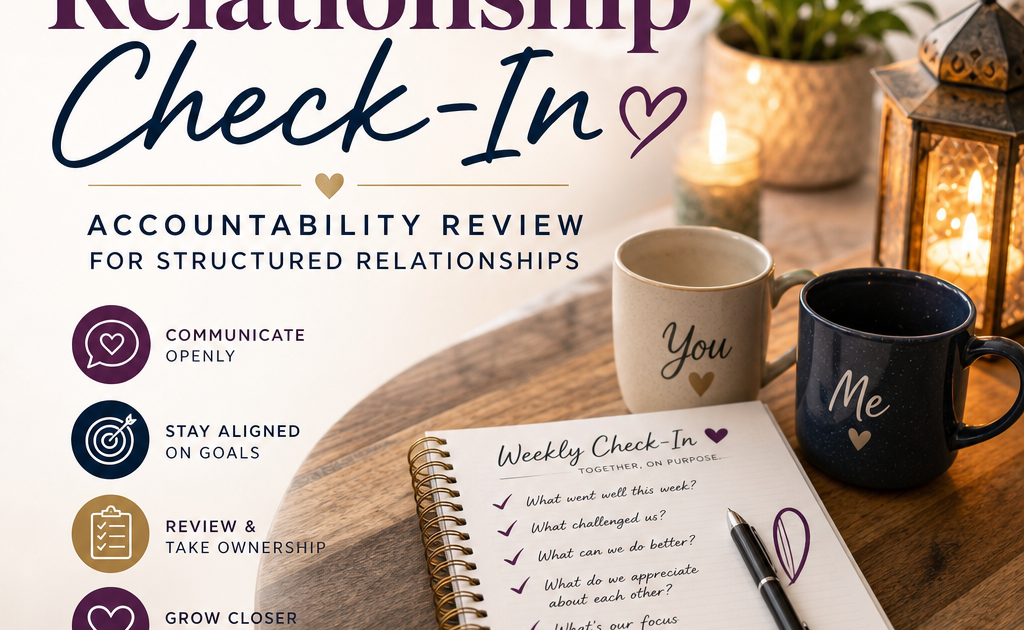
Weekly Check-Ins for Structured Relationships: What to Review and Why

Healthy structured relationships do not happen by accident. They are built through clear expectations, regular communication, and a willingness to course-correct before small issues become major problems. One of the simplest and most effective tools for keeping that process on track is a weekly relationship check-in.
A weekly check-in creates a predictable space to talk about what is working, what is not, and what needs attention. It helps partners stay aligned without turning every concern into a crisis. In structured relationships, that rhythm matters. It turns communication into a habit, and habit into trust.
Why Weekly Check-Ins Matter
When people assume everything is “fine,” important things often go unspoken. Needs get missed. Resentments build. Misunderstandings linger. A weekly check-in prevents that drift by making reflection part of the relationship itself.
It also supports accountability. Instead of waiting until one person feels overwhelmed, both partners can review agreements, responsibilities, and emotional patterns on a regular schedule. This is especially useful in structured relationships, where clarity and follow-through are essential.
A weekly conversation does not need to be long or intense. In fact, the best check-ins are often short, focused, and consistent. The goal is not to solve every issue in one sitting. The goal is to stay connected and informed.
What to Review in a Weekly Relationship Check-In
A useful check-in covers both practical and emotional topics. The exact format can vary, but the following areas give you a solid foundation.
1. Emotional Climate
Start by asking how each person has been feeling during the week. This is not about demanding a full emotional report. It is about noticing the tone of the relationship.
Questions to consider:
- How have we been feeling individually?
- Have there been moments of tension, distance, or warmth?
- Did anything feel especially supportive or especially difficult?
This part of the conversation helps both partners identify patterns before they harden into assumptions.
2. Agreements and Expectations
In structured relationships, agreements are only useful if they are remembered and maintained. A weekly review gives you a chance to revisit those commitments and make sure they still fit.
Review:
- Shared boundaries
- Scheduling expectations
- Communication norms
- Household or relationship responsibilities
If something has changed, say so directly. A good check-in is not about proving who was right. It is about making sure the relationship’s structure still works for both people.
3. Wins and Positive Moments
Not every check-in should focus on problems. In fact, one of the best ways to strengthen a relationship is to regularly notice what is going well.
You might review:
- Kind or thoughtful gestures
- Moments of effective communication
- Progress on shared goals
- Times when conflict was handled well
This part matters because it reinforces behavior you want to continue. It also reminds both partners that the relationship is more than a list of tasks and corrections.
4. Unmet Needs or Frustrations
A weekly relationship check-in should also leave room for concerns. The key is to discuss them early, clearly, and without blame.
Ask:
- Did anything feel missing this week?
- Was there a request that went unaddressed?
- Did either of us feel misunderstood, unsupported, or ignored?
Keeping this section routine makes difficult conversations less intimidating. It normalizes honesty and reduces the pressure to “save it all up.”
5. Logistics and Planning
Structured relationships often involve shared calendars, routines, or responsibilities. A weekly review is the right time to check practical details so they do not create unnecessary friction.
Review items like:
- Upcoming schedules
- Travel, appointments, or events
- Shared tasks and deadlines
- Any changes to routines
This may seem ordinary, but logistics are often where stress starts. Clear planning reduces confusion and helps both partners feel considered.
6. Accountability Review
An accountability review is one of the most valuable parts of a weekly check-in. It gives each person a chance to reflect on promises made and promises kept.
This is not meant to shame anyone. It is meant to build trust through follow-through.
You might ask:
- What did we each commit to last week?
- What got completed?
- What was delayed or forgotten?
- What support is needed to follow through next time?
In structured relationships, accountability is not about control. It is about reliability. When both people can see patterns clearly, they can make adjustments before disappointment grows.
How to Keep the Check-In Productive
A check-in works best when it is intentional. A few simple habits can make the conversation more useful.
- Pick a regular time and stick to it
- Keep the tone calm and respectful
- Avoid multitasking
- Take notes if needed
- Focus on solutions, not just problems
It also helps to keep the conversation balanced. If one issue becomes too big, you may need to set up a separate conversation rather than forcing everything into the weekly format.
The Long-Term Benefit
Over time, weekly check-ins do more than solve short-term issues. They create a relationship culture where honesty is expected, change is manageable, and both partners know what to expect.
That is especially important in structured relationships, where clarity and consistency are part of the foundation. A regular weekly relationship check-in supports emotional connection, practical coordination, and a strong accountability review process.
Small conversations, repeated consistently, can prevent major breakdowns. They also make it easier to appreciate progress, not just problems.
In the end, the point of a weekly check-in is simple: to stay aware, stay aligned, and stay connected.