
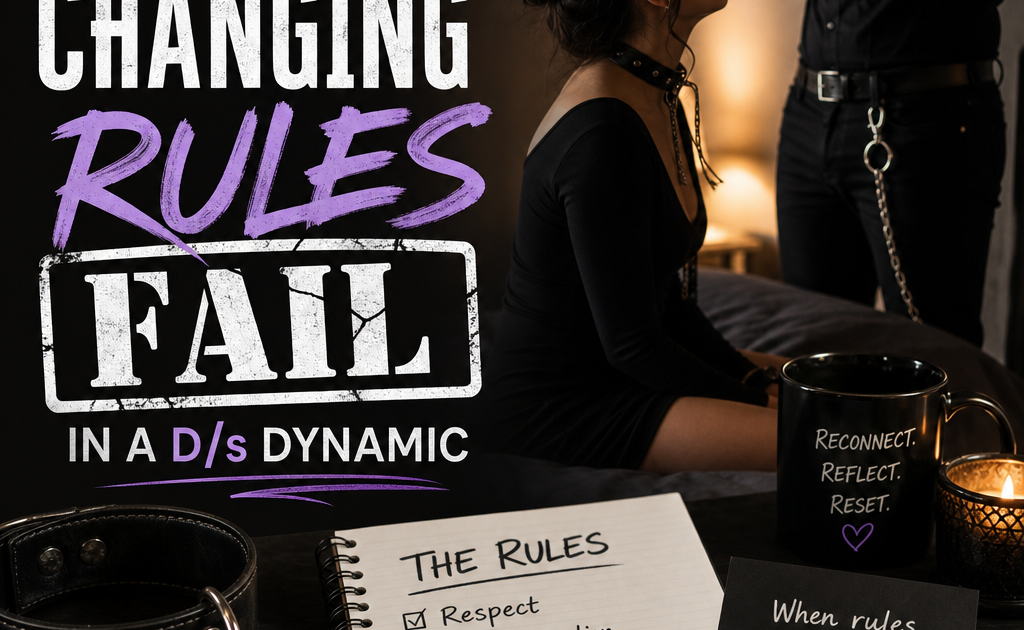
What to Do When a Rule Stops Working in Your Dynamic

In any D/s dynamic, rules can be helpful, grounding, and even deeply affirming. They create structure, reinforce roles, and support the needs of both people involved. But no rule is permanent. Over time, a rule may stop feeling useful, realistic, or meaningful. That does not mean the dynamic is failing. It usually means something has changed.
Knowing how to respond to changing rules is an important part of maintaining a healthy, flexible connection. The goal is not to cling to a rule just because it once worked. The goal is to keep your relationship agreements aligned with the people you are now.
Recognize When a Rule Has Outlived Its Purpose
Sometimes a rule stops working gradually. Other times, the problem is immediate and obvious. You may notice:
- It is being followed out of habit, not intention
- It creates stress instead of support
- It no longer fits your schedule, lifestyle, or emotional needs
- It causes resentment, frustration, or confusion
- It feels performative rather than meaningful
A rule that once strengthened your D/s dynamic can become unnecessary or even harmful if circumstances shift. Being honest about that is a sign of maturity, not failure.
Pause and Ask What the Rule Is Doing
Before removing or changing a rule, it helps to understand its original function. Every rule usually serves one or more purposes, such as:
- Encouraging consistency
- Supporting accountability
- Reinforcing a power exchange
- Improving communication
- Creating a sense of care or ritual
- Reducing anxiety or ambiguity
Ask: What need was this rule meant to meet? If the need has changed, there may be a better way to meet it now. For example, a rule about check-ins may no longer need to be daily if trust has deepened, or it may need to become more structured if life has become more stressful.
Talk About It Early, Not After Resentment Builds
When a rule starts to feel off, bring it up sooner rather than later. Waiting often creates unnecessary tension. One partner may begin to feel guilty, while the other may feel ignored or confused.
A useful approach is to discuss the rule with curiosity rather than blame. You might say:
- “This rule used to help me, but it’s been feeling difficult lately.”
- “I think our situation has changed, and I want to revisit this agreement.”
- “I’m noticing this no longer supports our D/s dynamic the way it used to.”
This kind of communication keeps the focus on the relationship, not on winning an argument.
Check Whether the Problem Is the Rule or the Way It’s Being Used
Sometimes a rule itself is fine, but the implementation is the issue. A rule may stop working because it has become too rigid, too vague, or too demanding. Before abandoning it completely, consider whether it could be adjusted.
Ask questions like:
- Is the rule too broad?
- Does it need clearer expectations?
- Is the timing unrealistic?
- Does it need flexibility for travel, work, health, or family responsibilities?
- Would a softer version accomplish the same goal?
For example, a rule requiring a daily written report may be too much during a busy period, but a short voice note might still preserve the connection.
Update Relationship Agreements Together
When changing rules, treat the process as part of your ongoing relationship agreements, not a problem to solve only when something breaks. Healthy dynamics evolve. Reassessment is normal.
A useful revision process may include:
- Identifying the rule that is no longer working
- Naming what it used to provide
- Discussing why it no longer fits
- Deciding whether to remove, revise, or replace it
- Agreeing on a trial period if needed
- Revisiting the outcome later
This creates structure without rigidity. It also ensures both partners remain active participants in the dynamic.
Don’t Be Afraid to Retire a Rule Completely
Not every rule needs a replacement. Sometimes the most respectful choice is to let it go. If a rule has lost its purpose, creates harm, or only remains because of tradition, it may be better to retire it.
Removing a rule can actually strengthen trust. It shows that both partners are paying attention and are willing to prioritize the health of the dynamic over the appearance of consistency. In a strong D/s dynamic, flexibility can be as valuable as discipline.
Watch for Emotional Reactions
Changing rules can stir up unexpected feelings. A Dominant may worry that loosening a rule means losing authority. A submissive may worry that asking for change will seem disobedient or disappointing. These reactions are common, and they deserve attention.
Make space for the emotional side of the conversation. Reassurance matters. So does clarity. If a rule changes, that does not automatically change the overall structure of your connection. It simply means your relationship agreements are being adapted to fit reality.
Treat Change as Part of the Practice
The healthiest dynamics are rarely the ones that never change. They are the ones that change thoughtfully. Changing rules is not a sign that your dynamic is unstable. It is a sign that you are paying attention.
A rule should serve the people in the relationship, not the other way around. When a rule stops working, the answer is usually not to force it harder. The answer is to pause, talk, and decide what best supports the connection now.
In the end, the most resilient D/s dynamic is one built on trust, honesty, and ongoing revision. When your agreements evolve with care, they stay meaningful.